
What if travel does not transform us but return us?

We assume we know who we are. We wake up, play the same record, repeat the same patterns and call it identity. But what if the person you are at home is not who you actually are, just who you have learned to perform?
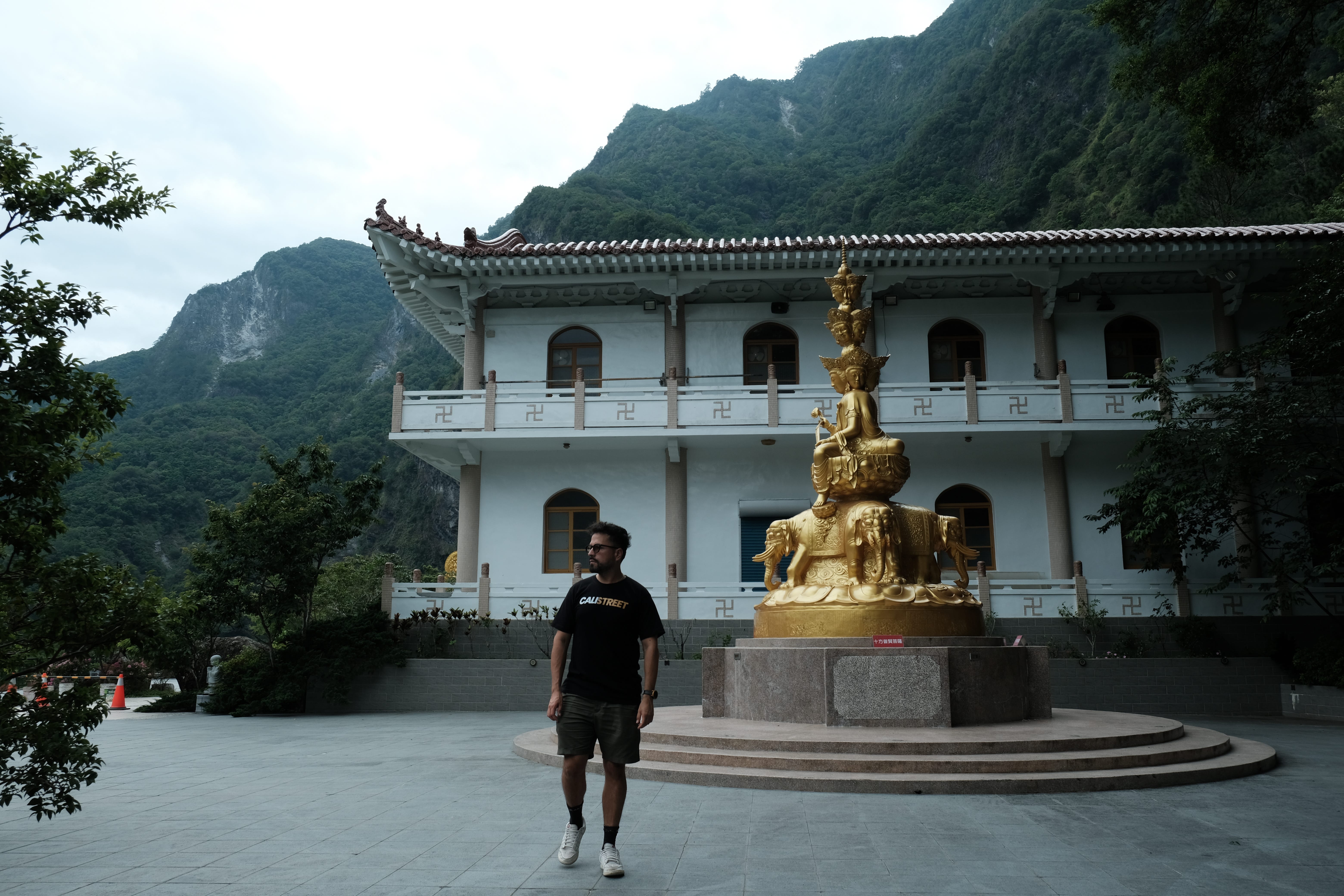
Last month I went to Taiwan and while wandering around this marvelous country, hiking in the National Park of Taroko, riding around Green Island or having a sip of coffee discussing with a friend I met on the train about the book he was reading on emotional intelligence and a collective car he bought in Tokyo, I felt extremely happy in my own skin. I liked the person I was there. Not necessarily that I don’t like the person I am back in the place where I live, caught in routine and multiple things to do, hobbies or work, but there was an intense calm presence and an almost eternal bliss flowing through my body, like it was meant to be. Everything around me was flowing perfectly. Every experience, every person I met, every place I visited was magnified, topping my expectations without effort. And now back in the same coffee shop where I usually work, read and write in Abu Dhabi, I cannot stop asking myself why. What is this process that changes me, or rather unwraps my personality, revealing aspects I don’t recall having in me?
The myth of the true self.
We treat identity as constant. We wake up and keep playing the same record from yesterday, as if this is who I was yesterday and therefore who I am now. But if identity is comprised of both inherited and developed traits, does it have to be permanent?
Psychology suggests that identity is a process. When we change environments, the brain enters a state of heightened neuroplasticity, activating new neural pathways and suppressing the habitual ones. The new city or country does not fake a personality. It pulls out traits that were somehow frozen inside us. Researcher Adam Galinsky at Columbia Business School found that people who live abroad and actively engage with foreign cultures score consistently higher in creative cognition and self-concept clarity. The unfamiliar does not confuse us. It clarifies us.
Reading this for the second and third time, everything started to make sense. This year, as I began reclaiming my freedom, I started feeling closer to who I was as a child. The same kid interested in water sports, nature, exploration, cultural diversity, cardio, exact science, poetry and written words. The same kid I somehow put on hold as the outer man took over, the one focused on building a professional career, distracted by the pleasures of the world, until that kid reclaimed his place. The question then becomes how we distinguish between being trapped in the past and moving forward with a clearer idea of who we actually are.
I believe children display the most prominent qualities of who they are before society changes them, as Rousseau observed. But it is our duty to reconnect with that. And by exposing ourselves to others, by seeing the world, we can remember what was always there.
The skeptic would say this is romanticization. That we feel more alive traveling precisely because nothing is familiar enough to trigger our default patterns. Remove the triggers and the patterns disappear temporarily. But return home and they come back, unchanged. If travel truly revealed identity, the person who came back from Taiwan would stay. Most of the time they don’t.
Loved this one, David! Especially the line that states: “The new city or country does not fake a personality. It pulls out traits that were somehow frozen inside us.”
Thank you for writing and for sharing!